.png)
https://www.ontrackwellness.com/blog/the-perfect-time-to-start-training-martial-arts

https://www.ontrackwellness.com/blog/the-perfect-time-to-start-training-martial-arts
https://www.ontrackwellness.com/blog/the-perfect-time-to-start-training-martial-arts
https://www.ontrackwellness.com/blog/the-perfect-time-to-start-training-martial-arts
The word of the month for March at On Track Wellness is Application.
Sensei Eric Romo writes:
"When committing yourself to training in martial arts it is important to set expectations for skill development and understand that, if all goes to plan, you should be able to avoid being in situations that ever require you to throw a strike or restrain another person. The application of martial arts that is available to you on a daily basis will come in the form of displaying self control, finding ways to be selfless by way of helping another, seeking balance between different parts of our lives and bouncing back when adversity presents itself. May we continue to strive to be our best self."
When I read that, I found myself sitting with the word application for a while.
Because when most people think about martial arts training, they picture the visible parts of it. The kicks, the punches, the sparring rounds that leave you breathing a little harder than before. From the outside it can easily look like the purpose of training is to prepare for a fight.
Yet the longer you spend inside a dojo, the more you realize that the true application of martial arts rarely has anything to do with fighting at all.
If training is doing what it is meant to do, you may spend years practicing martial arts and never once need to use a technique in that way. And that realization naturally leads to a deeper question.
What actually makes someone a martial artist?
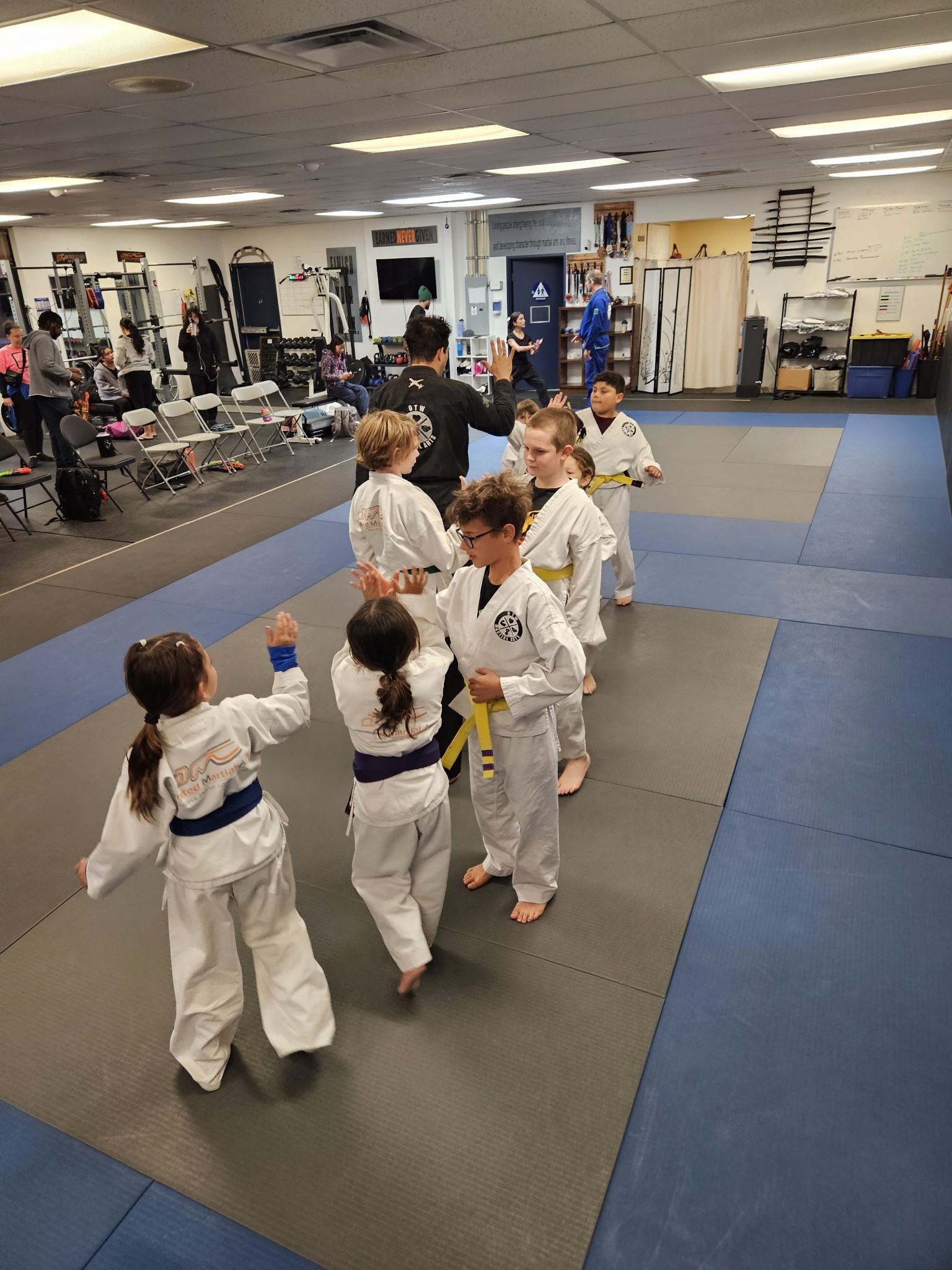
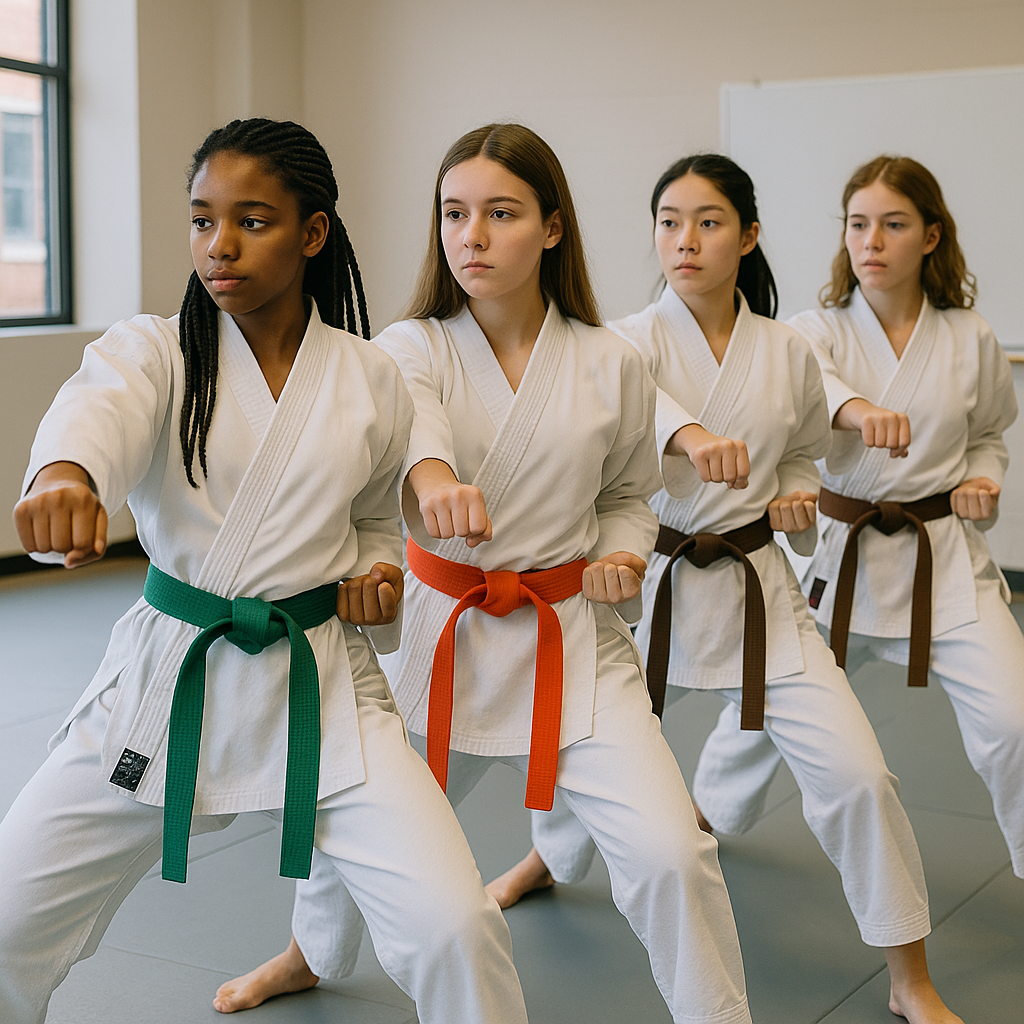
When people imagine a martial artist, the image that tends to come to mind is someone wearing a gi with a belt tied around their waist, often a black belt, someone who moves with strength and precision and who can demonstrate skills most people assume are far out of reach.
There is an assumption of confidence in that picture. Discipline. Control. Perhaps even fearlessness when it comes to defending oneself or others.
But the longer you watch students train, the more you begin to notice that the identity of a martial artist begins long before a black belt ever enters the picture.
At On Track Wellness there are two messages that quietly shape the culture of the dojo.
One of them is the sign hanging high on the wall that reads Earned, never given.
Another reminds us that a black belt is a white belt who refused to quit.
Taken together, those two ideas tell a story that reaches far beyond belt promotions.
They remind us that martial arts has never been about arriving at a certain level of perfection. Instead it asks something much simpler and at the same time much harder of the people who step onto the mat. It asks them to do the work, and to continue doing it even when progress is slower than they hoped.
In that sense, the identity of a martial artist begins with two decisions.
The first is the decision to start, which often looks as simple as putting on a white belt and walking into class for the first time.
The second decision is the one that quietly follows it again and again over time.
The decision to keep coming back.
Application, in martial arts, begins there.
It begins in the small moments where self control is required. It shows up when frustration rises during training and a student chooses patience instead of reacting emotionally. It appears when someone helps a training partner improve even though they are working through their own challenges at the same time.
It can even be seen in the effort to balance school, work, family life, and training without allowing one part of life to push the others aside.
These moments rarely look dramatic from the outside. Yet they are exactly where the mindset of a martial artist begins to take shape.
Training has a way of revealing our weaknesses with surprising honesty.
A missed block, an unbalanced kick, or the moment when you tap during a round of grappling can feel uncomfortable at first, especially when others are watching.
But martial arts slowly reframes those moments in a way that is both humbling and freeing.
Mistakes stop being something to hide from and instead become one of the most powerful tools for learning.
They invite us to pause and examine what we are doing. They teach control, patience, and awareness. They remind us that improvement is not something that can be rushed, argued for, or forced into existence.
Progress happens through repetition and attention, through the quiet willingness to try again.
This is where the application of martial arts begins to extend beyond the dojo.
Students who train long enough begin to carry that same mindset into other areas of their lives.
Children who once felt discouraged by mistakes begin to see challenges as something they can work through.
Adults rediscover a sense of discipline that often gets lost in the busyness of everyday life.
Slowly but surely, the lessons learned on the mat start to influence how people handle stress, setbacks, and responsibility outside of training.
In that way, martial arts becomes less about the techniques themselves and more about the character that develops through practicing them
So what makes someone a martial artist?
It is not talent alone. It is not the color of the belt around their waist, and it is certainly not perfection.
More often than not, it is simply the willingness to begin and the determination to continue.
The willingness to step on the mat again after a difficult class. The patience to keep practicing a movement that does not yet feel natural. The humility to listen, adjust, and try again tomorrow.
Over time those choices begin to shape something deeper than physical skill.
They shape identity.
A martial artist is not someone who has mastered everything. It is someone who has committed to the process of continual improvement, one practice, one lesson, and one disciplined step at a time.
And perhaps that is the most meaningful application of martial arts of all.
%20(1).png)